
Yes, with caveats
Best Time to Visit Mount Fuji
Quick answer
There are two different questions hiding in 'best time to visit Mount Fuji.' To see the peak clearly, the best months are December through February, when cold, dry air gives the sharpest skies, especially in the early morning before 9am. To climb it, the only official window is July 1 to September 10, when the trails, mountain huts and toilets are open; outside those dates the mountain is closed to hikers and the huts shut down. If you only want a view, avoid June through August, when humidity and haze hide the summit most afternoons.
Year round at a glance
Crowds: high- High
- -3.7°C
- Low
- -12.5°C
- Rain
- 178 mm
- Rainy days
- 13
Annual means across the twelve monthly rows in entity-context.json: average daily high -3.7C, average daily low -12.5C (measured at the summit-area station used for the climate normals, not at lake level in the Fuji Five Lakes towns, which run noticeably warmer), 178mm of rain averaged over about 13 wet days a month. The spread is what matters for planning: July and August highs of 7-8C against January's -14C, and 'clearest views' months are the opposite of 'warmest' or 'climbing season' months.
Climate data: Open-Meteo climate normals 1991-2020 (MRI_AGCM3_2_S), sites/tourmtfuji.com/src/data/entity-context.json
Seeing Fuji vs. climbing Fuji: two different calendars
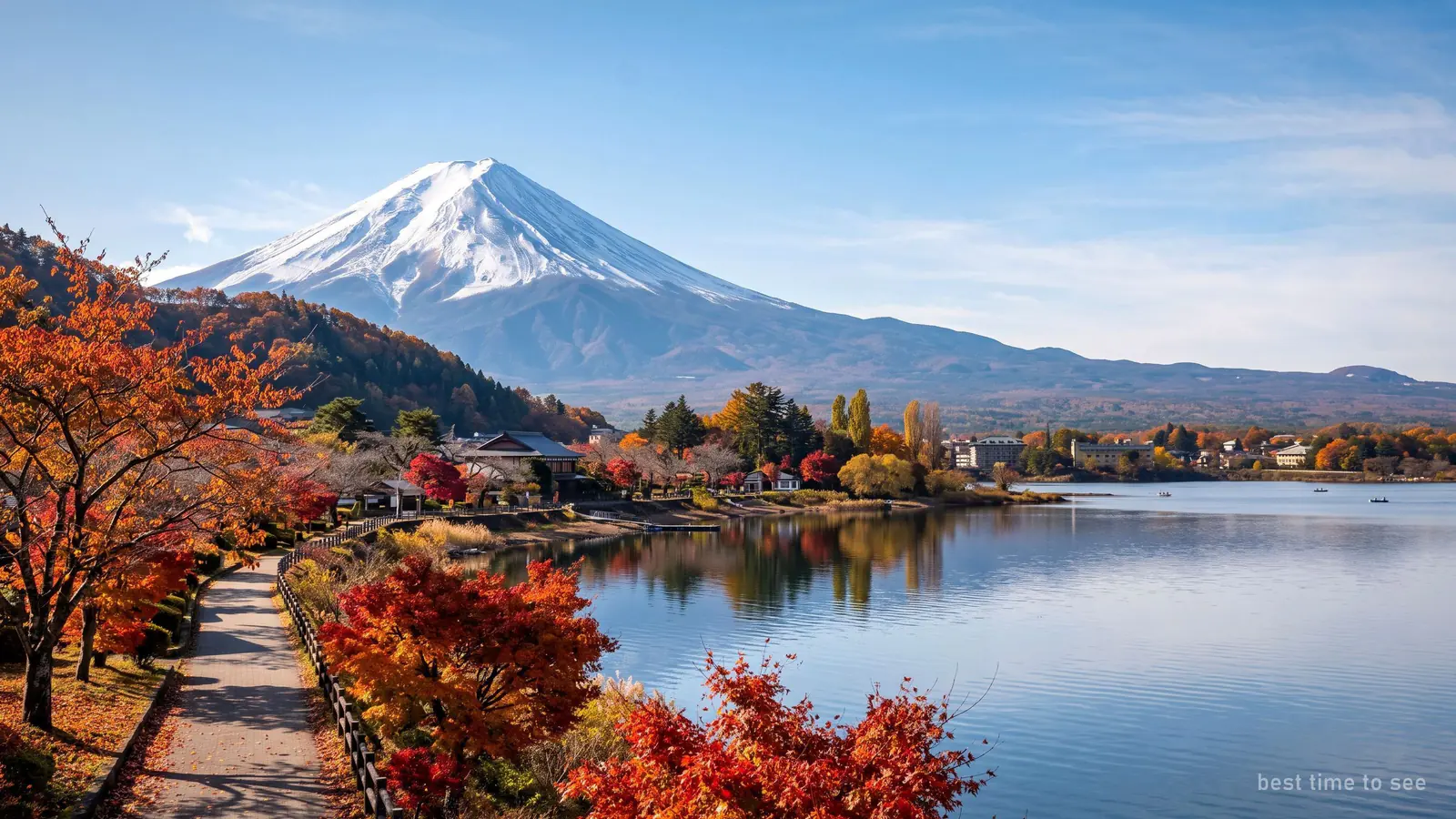
Most 'best time' searches conflate two separate trips. If the goal is a clear photo of the snow-capped cone from Kawaguchiko or Chureito Pagoda, winter wins: cold, dry air keeps the sky clear and visibility runs highest from December to February. If the goal is to stand on the summit, the calendar flips entirely — climbing is only officially open July 1 to September 10, precisely the months when the peak is hardest to see from below, because summer humidity builds cloud around the mountain most afternoons. A first-time visitor who wants both a clear view and a summit climb in one trip is choosing between two different seasons; most tours solve this by offering the 5th Station sightseeing product year-round and the climbing product only in the summer window.
Month by month
December-February: coldest and driest, with the clearest skies of the year; a short domestic-visitor spike around New Year. March: still climbing-closed, trails and huts shut, but a shoulder-season quiet month for viewing. Late March-mid April: cherry blossom season around the Fuji Five Lakes and at Chureito Pagoda, arrive early for both flowers and clear air before crowds build. Late April-early May: Golden Week, the single busiest week of the year. June: rainy season (tsuyu) — the summit is hidden by cloud on most days and trails are still closed. July 1: the Yoshida and Subashiri trails open; July 10: Fujinomiya and Gotemba open; demand climbs through the month with school summer holidays. August: peak climbing season and the Obon holiday week — mountain huts and the Yoshida Trail's daily climber cap fill fastest. September 10: all four trails close for the season; wettest month on record (typhoon season) but air clears between storms and early autumn colour starts. October-November: widely cited as the best compromise for viewing Fuji without climbing — clearer air than summer, comfortable temperatures, and the Fuji Five Lakes' best autumn foliage in mid-to-late November.
Best time of day
Regardless of season, early morning gives the best odds of seeing the mountain. Cloud typically builds through the day as the ground warms, so visibility is consistently highest before 9am and drops through the afternoon — most sharply in summer. If a trip includes only one attempt at a clear photo, schedule it for sunrise or shortly after, not midday.
What to bring in Year round
- ✓ Layers for a 20C+ swing between a Tokyo morning and a Fuji Five Lakes evening in shoulder season
- ✓ A windproof outer layer for viewpoints like Chureito Pagoda and lakeside parks, which are exposed
- ✓ Sun protection even in cold months — the air is dry and the light is strong at altitude
- ✓ A different, heavier kit entirely for climbing in July-September — see the climbing guide, not this page, for that list
Frequently asked questions
What is the best month to see Mount Fuji?
December, January or February for the clearest skies, though the mountain is genuinely visible on clear mornings in most months outside the June-August rainy and humid stretch.
What is the worst time to visit Mount Fuji?
June through August for visibility — the summit is hidden by cloud on most afternoons even though it's the only window to climb the mountain.
Can I see Mount Fuji and climb it on the same trip?
Only if you visit during the July 1-September 10 climbing season and are prepared for lower visibility odds than winter; a 5th Station sightseeing tour is available year-round regardless.
What time of day is Mount Fuji most visible?
Early morning, generally before 9am, before daytime humidity and cloud build up. This holds in every season.
Sources